
Malaysia’s hospitality sector continues to see strong activity across hotels, F&B, and other visitor-focused businesses. In 2024, Malaysia’s tourism industry generated RM291.9 billion, contributing 15.1% to the country’s GDP, while food and beverage accounted for RM47.7 billion of tourism activity.
With continued activity across the hospitality sector, design, build, and refurbishment can play an important role in creating spaces that support both the guest experience and day-to-day operations. Whether it is a new hotel, a café fit-out, or an upgrade to an existing property, choosing a firm with the right hospitality experience and project capabilities can make a meaningful difference to the outcome.
This guide looks at hospitality interior design firms in Malaysia, focusing on their capabilities, suitable project types, and practical considerations. The firms are listed in no particular order and selected based on our independent research. Please contact each firm directly to verify current services, pricing, availability, and suitability for your project.
Quick Comparison of the Top Hospitality Interior Design Firms in Malaysia
| Firm | Best Suited For |
|---|---|
| Blu Mountain Design | Hospitality properties seeking tailored upgrades, custom carpentry, and end-to-end project coordination. |
| MOM Designer House | Cafes, restaurants, bars, lounges, F&B kiosks, and lifestyle hospitality spaces seeking distinctive, brand-led interiors. |
| Blaine Robert Design | Hotels, luxury hospitality developments, and serviced residences seeking bespoke, design-led interiors with integrated design-and-build delivery. |
| SACHI Design | Hotels, serviced apartments, resorts, and hospitality developments seeking integrated spatial design, branding, and guest experience. |
| PLM Interiors | Hotels and larger hospitality interiors requiring fit-out, refurbishment, M&E coordination, and technical execution. |
| Goodwinds | Hospitality operators seeking end-to-end design-and-build services with strong attention to operational efficiency. |
| Binatex | Hotels and resorts seeking an experienced fit-out partner for large-scale interior projects. |
| FIZZ Associates | Hospitality and F&B businesses seeking an established design-and-build firm with both design and construction capabilities. |
Top 8 Hospitality Interior Design Firms in Malaysia
1. Blu Mountain Design
Founded: 2024
Location: Kuala Lumpur, serving projects across Peninsular Malaysia
Website: https://blumountaindesign.com/
Blu Mountain Design takes a thoughtful approach to hospitality projects, with each project tailored to the character and identity of the property. The company also brings its own factory-direct craftsmanship to carpentry and joinery, allowing for custom-made details while maintaining greater control over quality and workmanship.
All projects under Blu Mountain Design are managed according to PAM Standard Project Management, and the company holds CIDB Grade G5 certification. Its portfolio includes hospitality projects such as Hard Rock Cafe, as well as other hotels, event halls, eateries, and cafés.
Best Suited For: Hospitality properties looking for a tailored approach to upgrades, custom carpentry, and end-to-end project coordination, from design through to construction.
2. MOM Designer House
Founded: 2024
Location: Sabah
Website: https://momdesignerhouse.com/
MOM Designer House is a Malaysia-based interior design practice with a strong portfolio across hospitality and F&B, particularly cafes, restaurants, bars, lounges, kiosks, and other customer-facing spaces. Its hospitality work includes projects such as Baru Cafe & Lounge, Fatt Choi x Lemon Tree, Fatt Choi Experience Cafe, Guilt Free Society Riverson, Wine O’Clock Sabah, TRIO Bar & Bistro, Caro Cafe, Makarios Book Café, and Penthouse @ JTT Skylounge.
The studio takes a concept-to-completion approach, combining spatial planning, aesthetics, functionality, and brand expression. Its hospitality portfolio also shows experience across different formats, from full restaurants and lounges to compact F&B kiosks and experiential spaces. MOM has received recognition for its hospitality work, including a Platinum award for Best Bar & Club Design for Penthouse @ JTT Skylounge, as well as awards and finalist positions for café and bar projects.
Best Suited For: Cafes, restaurants, bars, lounges, F&B kiosks, and lifestyle hospitality spaces looking for distinctive, brand-led interiors with strong attention to customer experience and visual identity.
3. Blaine Robert Design
Founded: 2014
Location: Kuala Lumpur
Website: https://blainerobertdesign.com/
Blaine Robert Design is a luxury interior design and build firm whose portfolio extends into hospitality alongside residential and commercial work. The studio has undertaken hotel and hospitality projects and has worked with established hospitality names including Ritz-Carlton, Dorsett and Pullman, with its earlier portfolio specifically noting hotel works alongside offices, show galleries and show units.
Its approach combines interior design, creative direction, project management, and turnkey construction under one roof. This allows the studio to carry a hospitality concept from initial design through construction and final delivery, with an emphasis on bespoke materials, detailing, furniture, and overall design expression.
Best Suited For: Hotels, luxury hospitality developments, serviced residences, and hospitality environments looking for a highly bespoke and design-led interior with integrated design-and-build delivery.
4. SACHI Design
Founded: 2012
Location: Petaling Jaya
Website: https://www.sachi.my/
SACHI is a multidisciplinary design consultancy with hospitality projects including Oakwood Cameron Highlands, Lofthill, and KP Suites. The studio combines spatial design, branding, and strategy to create hospitality spaces that reflect their property’s identity and context.
Its hospitality approach focuses on guest experience, brand integration, and contextual design, making it particularly suited to projects where the interior needs to work as part of a wider hospitality concept rather than simply as a decorative layer.
Best Suited For: Hotels, serviced apartments, resorts, and hospitality developments looking for an integrated approach combining spatial design, brand identity, guest experience, and contextual design.
5. PLM Interiors
Founded: 2006
Location: Ampang
Website: https://www.plmgrp.com/
PLM Interiors specialises in interior fit-out and refurbishment, with hospitality among the sectors it serves. Its capabilities extend beyond interiors into design and build and M&E engineering, giving it greater technical depth for projects involving multiple building systems.
Its hotel portfolio includes projects such as Eastin Hotel and DoubleTree by Hilton Kuala Lumpur, covering areas such as front-of-house spaces, restaurants, banquet halls, kitchens, and back-of-house areas. This experience gives PLM a strong understanding of the different technical and operational requirements within a hotel environment.
Best Suited For: Hotels and larger hospitality interiors requiring fit-out, refurbishment, M&E coordination, and technical execution across both guest-facing and back-of-house areas.
6. Goodwinds
Founded: 2015
Location: Puchong
Website: https://goodwinds.com.my/
Goodwinds Project Solutions is a Malaysian interior design and build company with a strong focus on hospitality and F&B. Its portfolio includes OKI Shukodo Restaurant, HWC Coffee Pavilion Bukit Jalil, HWC Coffee Subang SS15, and Santan at Wangsa Walk, covering restaurants and cafés.
The company provides end-to-end design-and-build services, with hospitality projects balancing brand identity, customer experience, and operational requirements such as space planning, kitchen workflow, service areas, and technical coordination.
Best Suited For: Hospitality operators looking for an end-to-end design-and-build partner that combines brand-led interiors with practical kitchen workflow, operational efficiency, technical coordination, and construction delivery.
7. Binatex
Founded: 2006
Location: Shah Alam
Website: https://binatex.com.my/
Binatex has built its experience around large-scale interior fit-out and decoration works, with a strong track record in hospitality. The company has worked on established hotel and resort properties, giving it experience with projects where scale, coordination, and finish quality are important.
Its hospitality portfolio includes Hard Rock Hotel Desaru Coast, Anantara Desaru, Amari Hotel Johor, and Royale Bintang Damansara. Its project references also include interior fit-out as well as refurbishment and refurnishing, making it relevant to both new hospitality interiors and property upgrades.
Best Suited For: Hotels and resorts looking for an experienced fit-out partner with established hospitality references and experience across large-scale interior projects.
8. Fizz Associates
Founded: 2004
Location: Petaling Jaya
Website: https://www.fizzassociates.com/
FIZZ Associates is a Malaysian interior design and build firm with over 20 years of experience, covering a range of sectors including hotels and F&B. Its positioning allows clients to work with one firm across both the design and construction aspects of a project.
The company also highlights registrations with LAM, MIID, CIDB, SPKK, PKK, and MOF, giving it a broad professional and contractor registration profile alongside its hospitality and F&B experience.
Best Suited For: Hospitality and F&B businesses looking for an established Malaysian design-and-build firm with both design expertise and construction capability.
What should hospitality business owners look for in an interior design firm?
How do hotel and café refurbishment projects differ from new fit-out projects?
Refurbishment projects can be more complex than new fit-outs because you are working around an existing property. You may need to account for existing layouts, building services, hidden technical issues, and the practical challenge of keeping parts of the business running during the work. With a new fit-out, there is generally more freedom to plan the space from the ground up.
For owners planning a refurbishment, having a clear scope, realistic budget, and well-defined priorities from the start can make the project easier to manage. It is also worth discussing the existing property’s condition with the design or build team early, so potential technical issues and other constraints can be identified before work begins.
Why is refurbishment more operationally sensitive?
Refurbishment needs to work around existing M&E systems, structural limitations, trading hours, and areas that may need to remain open. Unlike a new fit-out, there is often less freedom to change the underlying layout or building services. This makes early planning important, especially when the property needs to continue operating during the upgrade.
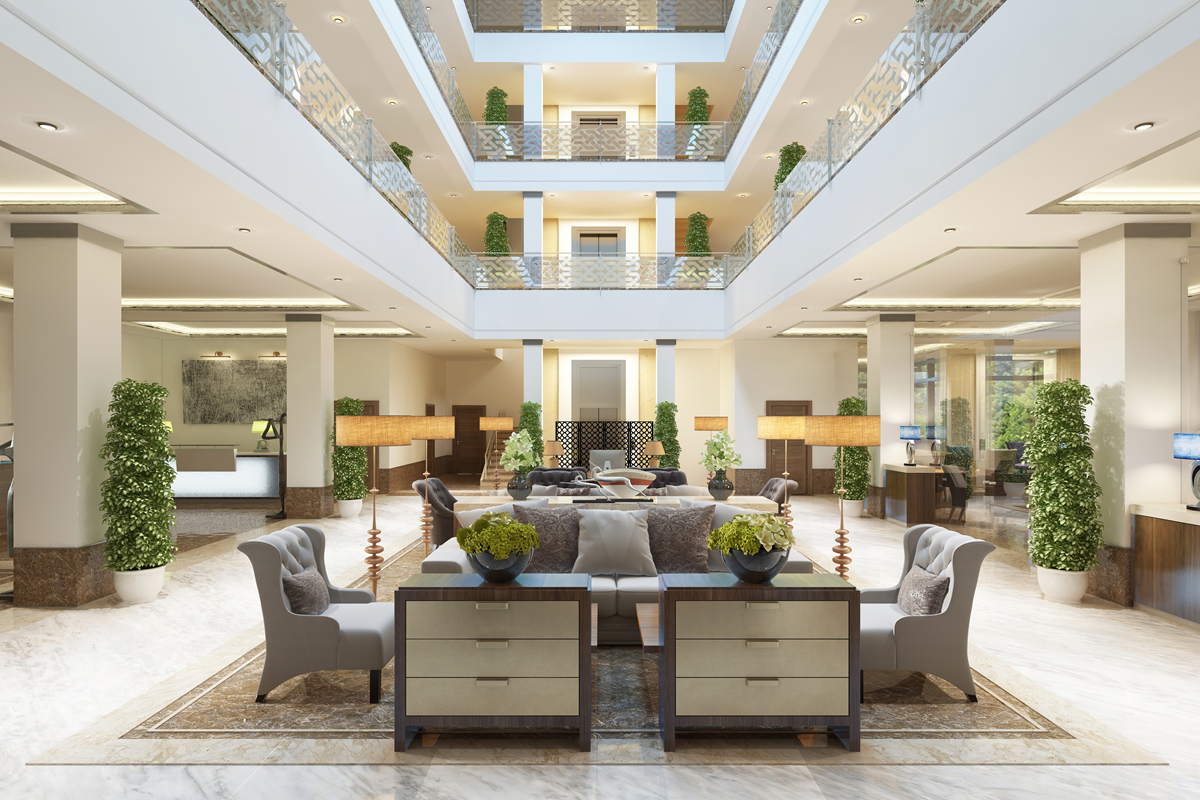
For hotels, the work can also extend well beyond guestrooms. Public areas such as reception lobbies, lounges, function rooms, gyms, restaurants, and other guest facilities may all need to be upgraded while keeping the overall operation running smoothly. A good refurbishment plan should take these different areas and their operational requirements into account.
Why is phased execution important for live hospitality sites?
Phased execution can help reduce disruption to the business. Rather than closing an entire property or venue at once, the work can be planned in stages, allowing different areas to be completed while other parts remain operational.
This can be particularly useful for hotels, cafés, and restaurants where closing for an extended period may affect revenue. When comparing firms, it is worth asking how they approach phasing, coordinate different teams, manage work around trading hours, and plan the transition back into normal operations.
| Project factor | New fit-out | Refurbishment |
|---|---|---|
| Budget predictability | Usually higher | Usually lower |
| Hidden compliance risk | Lower | Higher |
| Closure time | Often planned upfront | Often phased |
| Design flexibility | Higher | Constrained by existing site |
| M&E intervention risk | Moderate | Often high |
| Brand repositioning potential | Strong | Strong, but constraint-led |
How can you vet a hospitality interior design firm before signing?
You can vet a hospitality interior design firm by checking its registration, hospitality experience, scope of work, project approach, and handover process before comparing fees. A strong portfolio is useful, but it is also worth asking about previous hospitality projects, what is included in the scope, how responsibilities are divided, and how the team handles timelines, coordination, and handover. This gives you a clearer picture of whether the firm is a good fit for your project.
Ask these vetting questions in discovery calls
- Have you handled live-site hotel or café refurbishments before?
- Which hospitality projects on your website are most similar to ours in scale and operating model?
- Are you design-only, design-and-build, fit-out contractor, or full turnkey?
- Who coordinates architects, M&E consultants, kitchen specialists, and mall or hotel management approvals?
- How do you plan FOH and BOH flow, storage, cleaning access, and staff circulation?
- What assumptions are built into your quotation, and what is excluded?
- What is your handover, snagging, and defect liability process?
- What licences or industry memberships do you hold?
What budget and timeline factors affect hospitality interior design projects in Malaysia?
Budget and timeline are usually shaped by the complexity of the project, technical requirements, procurement, approvals, and whether the business needs to stay open during the works. It is worth looking at the project as a whole rather than focusing only on finishes and furniture. A seemingly simple upgrade can become more involved once M&E works, kitchen requirements, custom joinery, or site restrictions come into play.
Key cost considerations
Some of the biggest cost areas can include M&E upgrades, kitchen and bar requirements, grease and exhaust systems, custom joinery, bathrooms, acoustic treatments, lighting, and compliance-related works. With refurbishment projects, existing conditions can also affect the budget once walls, ceilings, or building services are opened up.
Rather than relying on a general industry price range, it is better to ask firms for a detailed proposal based on your actual property and scope. This gives you a clearer idea of where the budget is going and what may sit outside the initial quote.
Building a realistic project budget
A practical budget can separate design fees, fit-out works, M&E works, loose furniture and equipment, contingency, and any costs associated with reopening. The exact allocation will vary depending on the concept, property, and existing conditions, so there is no single percentage split that works for every project.
When comparing firms, give each one the same brief and ask for a clear breakdown of what is included, what is excluded, and any assumptions behind the price. This makes the proposals much easier to compare and helps identify potential additional costs early.
Planning for a realistic timeline
Hospitality projects can take longer when there are authority approvals, changes to operator requirements, imported material lead times, unexpected site conditions, or coordination issues between different consultants and contractors. Live-site refurbishments can add another layer of complexity because disruptive works may need to be scheduled around trading hours.
Building some flexibility into the programme can therefore be useful, particularly for projects involving multiple trades, custom-made elements, or phased works. A clear schedule with defined responsibilities can also make it easier to track progress and deal with changes along the way.
Frequently Asked Questions
1. What is a hospitality interior design firm?
A hospitality interior design firm designs guest-facing commercial spaces such as hotels, cafés, restaurants, and resorts. It usually focuses more heavily on customer experience, operational flow, commercial durability, and brand expression than a general interior designer.
2. Do hospitality interior design firms in Malaysia also handle build and refurbishment work?
Some do, but not all. Firms such as Blu Mountain Design, Decorzo Space, TLA Design Studio, PLM Interiors, and Fortis Build Asia publicly present design-build, fit-out, refurbishment, or turnkey scope on their sites, while others may lean more toward consultancy or specific construction packages.
3. How do I choose between a hotel specialist and a café design-and-build firm?
Choose based on project complexity and operating model. Hotel projects usually need stronger experience in guestrooms, BOH planning, M&E coordination, and phased refurbishment, while cafés often prioritise concept branding, service counter flow, kitchen coordination, and faster rollout.
4. Should I hire one design-and-build company or separate designer and contractor?
A single design-and-build partner can reduce coordination friction and speed decisions. Separate appointments may suit owners who want tighter tender control, more contractor competition, or independent design oversight.
5. How can I verify whether a Malaysian firm is properly registered?
You can check contractor details through the public CIDB contractor search and review CIDB’s guidance on contractor selection and registration checks. You should also ask for project references, completed site photos, and a written scope with exclusions before signing.
Conclusion
The strongest hospitality interior design firms shortlist is one that helps you compare firms based on how well they fit your actual project. Look beyond polished visuals and consider their hotel or F&B experience, refurbishment background, technical coordination, and build capability.
A practical next step is to contact 2 to 3 shortlisted firms with the same brief, then compare their scope, inclusions, exclusions, phasing approach, and proposed timeline side by side. This gives you a clearer basis for choosing a firm that suits your property’s needs and project requirements.