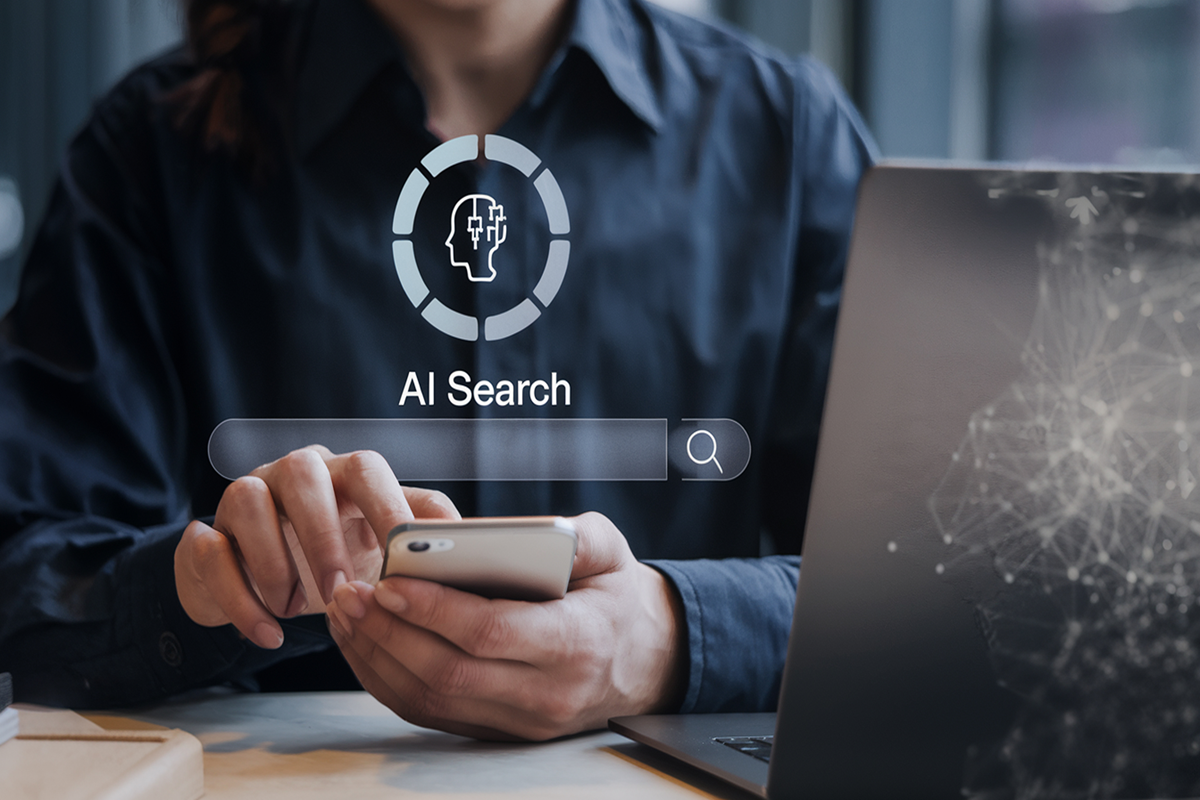

Few topics are generating more discussion right now than the impact of AI on search. Following Google’s announcements at I/O 2026, which highlighted the continued rollout of AI Overviews and AI Mode, many marketers are rethinking how people will discover information online in the years ahead. While the classic blue links have not completely disappeared, the role they play in the search journey is clearly evolving.
To better understand what these changes mean in practice, we sat down with Jerry Lim and his team at BrandSwift, the Kuala Lumpur digital marketing and SEO company he leads. With more than thirteen years of experience in the industry, Jerry has helped businesses navigate major shifts in search and adapt to changing user behaviour.
In our conversation, Jerry shared his perspective on how AI is reshaping search, what fundamentals still matter, and how businesses can remain visible as the search landscape continues to evolve.
Expert Insights: Jerry Lim on AI Search and SEO
1. Let’s start with the question everyone is asking: Has AI killed SEO?
Not at all, though I understand why people ask. AI hasn’t killed SEO. It has changed the type of SEO that works and the position of SEO within the search engine.
People still go to Google and search for information, but now the AI Overview takes up space at the top and absorbs some of that traffic. That said, ranking organically still drives traffic too. I see AEO and GEO as layers built on top of SEO. Thin, high-volume content created mainly to rank is becoming less effective. What still works, and arguably matters more than ever, are the fundamentals: creating genuinely useful content, demonstrating expertise, building authority, and earning trust.
2. What has actually changed, in practical terms?
The biggest change is that getting traffic now depends less on getting ranked. It’s a mixture of keyword ranking, AEO, and GEO.
Back then, search was pretty straightforward: rank high on Google. A user searches for something. Google serves up a list of links. They click one of the top results. That’s where the traffic goes.
Now, many searches are answered directly by AI Overviews. Some users don’t even start with Google anymore. They ask ChatGPT, Gemini, or Perplexity instead.
So even if you’re ranking at the top, you may get fewer clicks than before. Visibility no longer guarantees traffic. Ranking and earning the visit are now two separate challenges, yet most businesses are still focused on the first.
3. Is the zero-click effect really new?
The idea isn’t new. What’s changed is the scale.
In the past, zero-click searches were mostly simple things like weather forecasts or currency conversions. Nobody was really building a business around that traffic anyway. Today, AI can now summarise genuinely useful, mid-funnel content. Searches like “What’s the difference between X and Y?” or “How do I fix this?” are being answered more in AI summaries. That’s traffic with real commercial value, and that’s what’s being affected.
4. So, is AI a threat or an opportunity for businesses doing SEO?
It’s a redistribution more than either. Traffic is moving from one place to another, and whether that helps or hurts you depends on what kind of business you are. It’s still important that you have good SEO, because it makes it easier to beat competitors who didn’t bother with SEO before.
If today you only focus on SEO, that’s a threat, because traffic isn’t as good as it used to be. You have to focus on AI optimization as well. But there’s a real shift underneath. Optimizing to rank and optimizing to be cited by an AI are not the same exercise. To rank, you had to beat other pages in a relative contest. To be cited, you have to be the clearest, most trustworthy, most quotable version of an answer the model can find. Those goals overlap, but not completely, and that difference is where the new work sits.
5. There’s a lot of new terminology now: GEO, AEO, AI SEO. Is any of it real, or is it just rebranding?
A bit of both. They are real, but they’re not as new as the hype makes them sound. And AEO and GEO are not the same thing, even though people mix them up. AEO is about being the direct answer on the search page, in snippets and AI Overviews. GEO is about being the source that an AI like ChatGPT or Perplexity cites when it builds an answer. Different targets.
The rebranding part is fair too. The names are a mess. People throw around GEO, AEO, GSO, AIO, and some say it’s all just one thing with too many labels. Even the experts don’t fully agree. But I prefer to just categorize them as AI search optimization.
But here’s what’s actually real underneath. Getting cited by an AI is not the same as ranking on Google. Studies show the overlap between what ranks and what gets cited is smaller than you’d expect. So it’s not pure rebranding. The fundamentals still carry you a long way: good content, clear structure, authority, trust. What’s new is the surface and the measurement. You now track whether you’re being cited, not just where you rank.
6. What does that new work involve, specifically?
Let me give you some examples. There are three things BrandSwift’s SEO team pays close attention to.
First, answer the question directly and early on the page. AI models tend to pull content that clearly answers a user’s question without having to piece together information from different parts of the article. If your key point only appears halfway through the page, there’s a good chance it gets overlooked. We also build around the harder questions, because if a question is more specific or complex, the AI needs sources to validate its answer, so it crawls and pulls from real content.
Second, structure your content properly. Schema markup, clear headings, and FAQ sections help search engines and AI systems understand what your page is about, how the information is organized, and who it’s coming from. We now treat this as a requirement, not a nice-to-have.
Third, build brand authority. AI systems are more likely to reference sources that consistently demonstrate expertise and credibility on a topic. That’s why we’re seeing a shift away from purely chasing rankings and towards building a recognized brand within a specific area. In many cases, being known as a trusted expert is worth more than another keyword position.
7. You often mention trust as a key factor. Does Google’s E-E-A-T framework like experience, expertise, authority, and trust carry more weight today?
Absolutely. Google’s E-E-A-T framework exists because search engines and AI models share the same challenge: they don’t want to confidently surface bad information. So, they look for credibility signals such as real authors, a proven track record, and consistency.
The practical takeaway is simple: anonymous content is becoming much harder to trust. If a reader cannot tell who’s behind a piece of content or why that person should be trusted, AI systems tend to make the same judgement.
8. That raises an interesting question. If trust matters more than ever, what happens when AI generates content so easily? How do businesses actually stand out?
AI will definitely lead to more content being published online. But that doesn’t make trust less important. If anything, it makes trust even more valuable.
When anyone can generate an article in a matter of minutes, simply publishing content is no longer enough. Businesses need to give people a reason to pay attention. That could be first-hand experience, original data, practical insights, or a perspective that comes from actually working in the industry.
That’s how our team thinks about AI as well. We use it every day for research, drafting, and organising ideas. But it’s a tool, not a replacement for expertise. AI can help you communicate what you know faster, but it cannot create experience and credibility on your behalf.
In many ways, AI has simply raised the bar. When content becomes easier to produce, publishing more of it is no longer a competitive advantage. The businesses that stand out will be the ones that can demonstrate real expertise and share unique insights.
9. For a business owner reading this, what should they actually do?
That’s a great question. I’d advise on five tips.
First, if you’re looking for an SEO company, don’t pick one that only focuses on SEO and ignores AI search. Rankings still matter, but they’re no longer the whole story. Pay attention to branded searches, direct traffic, enquiries, and conversions.
Second, when you start your SEO and AI search journey, I’d advise you to pick a topic and own it. It’s better to be known as the go-to source for one specific area than to be average across ten. Depth beats breadth.
Third, put real people behind your content. Make it clear who wrote it, what their experience is, and why readers should trust them. Even if you’ve hired an SEO company, you should still add your own insight and expertise. AI can tell the difference between real experience and surface-level content, and the surface-level stuff has basically lost its value. Surface-level content that AI can easily summarize has lost nearly all its value, while content showing real first-hand experience is what gets trusted and cited. That gives the business owner the “why” behind your advice.
Fourth, get the technical fundamentals right. Site speed, clear structure, schema markup, and a good mobile experience. They may not be exciting, but they’re still some of the highest-return improvements you can make.
Finally, when running a business, never rely on a single source of traffic. If all your visibility comes from one keyword or one platform, you’re exposed to every algorithm change. Build other channels too, whether that’s email, referrals, partnerships, social media, or your wider online presence. Surprisingly, those other platforms can also help your credibility.
10. Looking two or three years ahead, where does this land?
Honestly, nobody knows for sure, and anyone who says they do is guessing. But the direction is clear enough.
I think search is slowly splitting into two kinds of behaviour. The first is “I want an answer.” That’s where AI will keep playing a bigger role. People want quick, direct answers, and in many cases, they can get what they need without ever clicking through to a website. I believe people will rely on AI assistance even more over time.
The second is “I want to choose, buy, trust, or commit.” That’s different. When people are evaluating a service or making a purchase, they still want proof. They want to visit your website, read reviews, understand your expertise, and do their own research before deciding. For now, AI touches these buying searches a lot less than the answer-type ones, though that’s slowly changing too. And the people who do click after reading an AI answer tend to be more serious, because they’ve already done the first layer of research.
On top of that, there’s a bigger shift that might come faster than we expected, and that’s agents. Right now, people use AI to get answers. Soon they’ll let AI do the work, research options, compare, even buy, without opening a single website. When that happens, your customer isn’t always a person reading your page. Sometimes it’s an AI reading it for them. So your site has to be readable by machines, not just people. Clean structure, schema, clear pricing, accurate facts about your brand everywhere.
11. Any final advice?
Don’t panic, but don’t wait either.
A lot of the fundamentals haven’t changed. Real expertise, clear content, genuine usefulness, and a recognisable brand are now the only things that work reliably. The difference is that they’re no longer just best practices. They’re becoming the baseline.
In that sense, the path is actually simpler. Stop chasing every algorithm update and focus on becoming what real people and AI systems are looking for.
If you want to get ahead in search engine marketing, you should start understanding it more now.
Key Takeaways
- Rankings no longer guarantee clicks.
- Visibility and traffic are now different goals.
- Trust is becoming the new ranking factor.
- Original expertise beats AI-generated content.
- Use AI as a tool, not the author.
- Don’t rely on a single traffic source.
About Jerry Lim
Jerry Lim is the Founder and Managing Director of BrandSwift, a Kuala Lumpur-based SEO, AEO, GEO, web design, and digital marketing consultancy. With more than thirteen years of experience as an SEO strategist and technical advisor, he has helped businesses across Malaysia and the region improve their search visibility, strengthen their online presence, and generate sustainable growth through SEO and website optimisation.
Founded with the belief that businesses deserve more than generic marketing advice, BrandSwift was built to bridge the gap between technical expertise and genuine partnership. Today, the agency helps businesses grow their visibility across traditional search, AI-driven search platforms, and the wider digital landscape through SEO, web design, content strategy, and digital marketing.
BrandSwift Website: https://www.brandswift.com.my/