
Introduction
Human Resource Management System or HRMS systems are becoming more common among Malaysian companies because they help automate HR tasks, reduce paperwork, and make people management easier for both employers and employees. This article provides an overview of HRMS systems in Malaysia, how they support businesses, when a company should consider using one, and a list of HRMS companies that are commonly considered by organisations in Malaysia.
Disclaimer
The companies listed here are presented for informational and research purposes. The ranking does not represent the best to worst order. It is based on our understanding and perspective at the time of writing. We encourage readers to contact the companies directly to confirm whether the solutions match your business needs, budget, and expectations. Information in this article is correct at the time of writing. If you find any inaccurate details, you are welcome to reach out to us so we can review and improve the content.
This guide is written in simple and practical wording to help Malaysian business owners, SME managers, and HR teams understand HRMS systems without technical complexity.
| Table of Contents |
| Introduction |
| Disclaimer |
| Top HRMS System Companies Commonly Considered in Malaysia |
| HRMS System Company Comparison Table |
| What is an HRMS System in Simple Terms |
| How HRMS Systems Support Malaysian Businesses |
| When a Business Should Consider an HRMS System |
| Steps to Choose the Right HRMS System Company |
| Common Mistakes Businesses Should Avoid |
| Conclusion |
Top HRMS System Companies Commonly Considered in Malaysia
Below is a curated list of HRMS system companies that are commonly considered by businesses and SMEs in Malaysia. Each company description includes its background, services, and the type of organisations it is best suited for.
The purpose of this section is to help business owners understand the positioning of each provider before contacting them for further discussion.
1. Swingvy
Location
Kuala Lumpur, Malaysia
Founded
2016
Website Link
https://www.swingvy.com
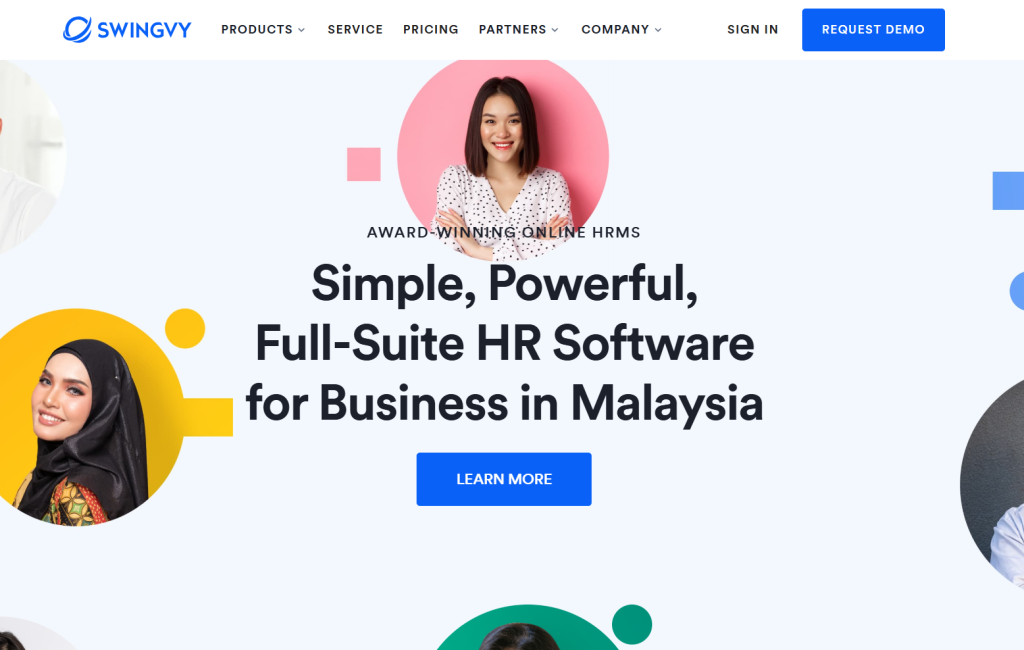
Swingvy is recognised as one of the well known cloud based HR and payroll platforms used by SMEs in Malaysia. The company focuses on providing an all in one HRMS solution that covers HR records, leave management, payroll processing, and employee self service in a single platform. The system is designed with a clean and simple interface, which makes it easier for HR teams and employees to adapt without heavy training.
Swingvy is often chosen by businesses that prefer a modern, digital first solution where most HR processes can be completed online. The platform also supports mobile use, which is useful for companies with remote or on site teams who need to access HR information from anywhere.
Best Suited For
SMEs, startups, and growing companies that want a cloud based HRMS system with payroll and leave management in one platform, and prefer a modern user friendly interface.
2. Kakitangan
Location
Petaling Jaya, Selangor
Founded
2015
Website Link
https://www.kakitangan.com
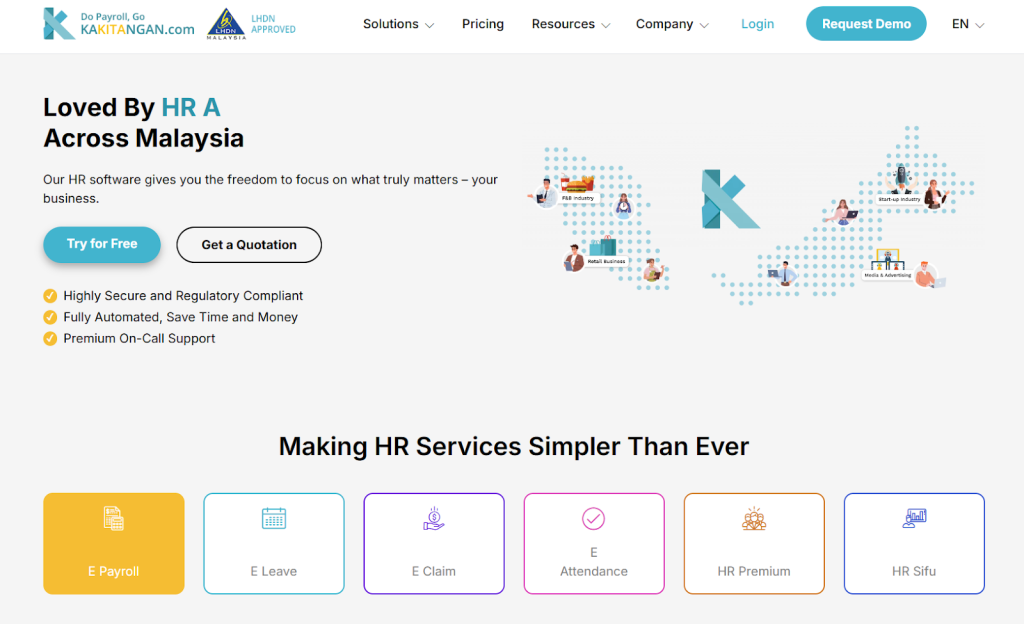
Kakitangan is a popular Malaysian HR and payroll platform that focuses on helping local businesses digitalise HR processes in a simple and practical way. The system covers payroll, leave management, attendance tracking, and employee records, with features designed to align with Malaysian payroll practices and statutory contributions.
One of the key reasons many SMEs choose Kakitangan is its focus on local compliance and ease of use. Many Malaysian companies find the platform suitable for day to day HR operations without complex system setup. The platform also includes employee self service features that reduce manual HR requests.
Best Suited For
SMEs, small businesses, and local companies that want an HRMS system built with Malaysian payroll practices in mind and prefer a straightforward and practical system.
3. HReasily
Location
Kuala Lumpur, Malaysia
Founded
2015
Website Link
https://www.hreasily.com
HReasily is a regional HRMS provider that serves businesses across Southeast Asia, including Malaysia. The platform offers HR modules such as payroll, leave management, claims, attendance, and HR records, with strong emphasis on helping companies automate repetitive HR processes and reduce manual paperwork.
Malaysian businesses often consider HReasily when they are looking for a cloud based HRMS system that can support multiple locations or cross border teams. The system is suitable for companies that want to manage HR operations centrally while allowing employees to access HR services online.
Best Suited For
SMEs and companies with regional teams or multiple branches that require a cloud based HRMS system with standardised HR processes across locations.
4. Info Tech
Location
Kuala Lumpur, Malaysia
Founded
1996
Website Link
https://www.infotech.com
Info Tech is one of the more established HR and workforce management solution providers in the region, offering HRMS systems that cover payroll, attendance, time tracking, and HR administration. The company has long experience working with medium and large organisations, especially those with larger headcount and more structured HR processes.
Businesses in Malaysia often consider Info Tech when they require a more comprehensive HRMS solution with deeper workforce management features. The company also provides biometric attendance and hardware integration options for organisations with on site workforce requirements.
Best Suited For
Medium sized companies and larger organisations that need a structured HRMS system with workforce management and attendance hardware integration options.
5. JustLogin
Location
Kuala Lumpur, Malaysia
Founded
2000
Website Link
https://www.justlogin.com
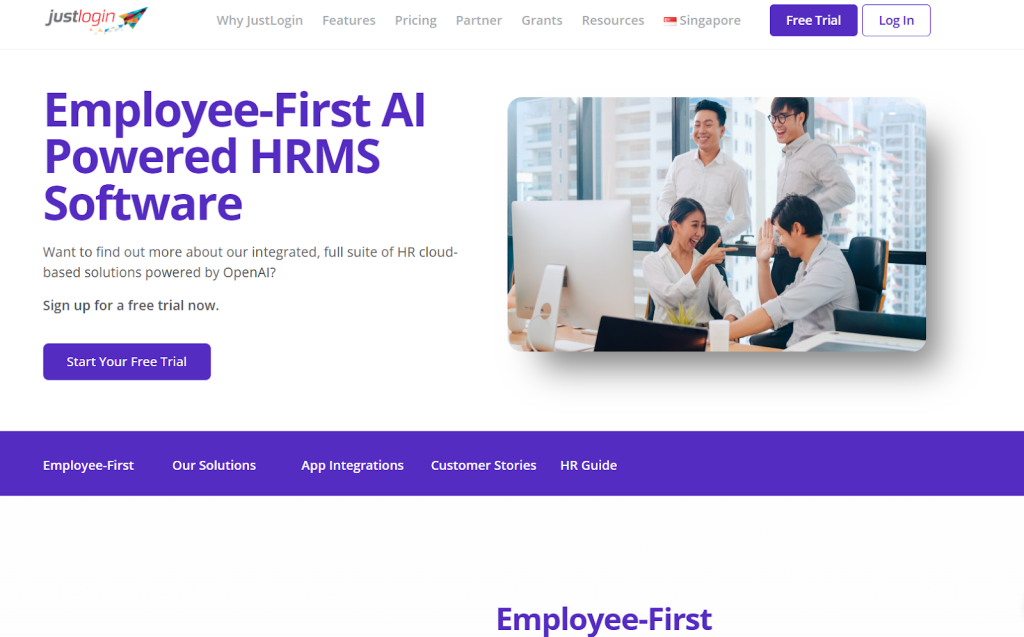
JustLogin is a cloud based HRMS provider that offers HR modules such as payroll, leave management, attendance, expense claims, and HR records. The system is designed to help companies manage HR processes digitally while improving transparency and accessibility for employees and managers.
Malaysian businesses often consider JustLogin when they want a cloud based HRMS platform that supports remote access, employee self service, and centralised HR data. The platform also appeals to companies that want to gradually digitalise HR processes without moving everything at once.
Best Suited For
SMEs and service based companies that want a flexible and scalable HRMS system with strong employee self service features.
6. HR2eazy
Location
Petaling Jaya, Selangor
Founded
2015
Website Link
https://www.hr2eazy.com
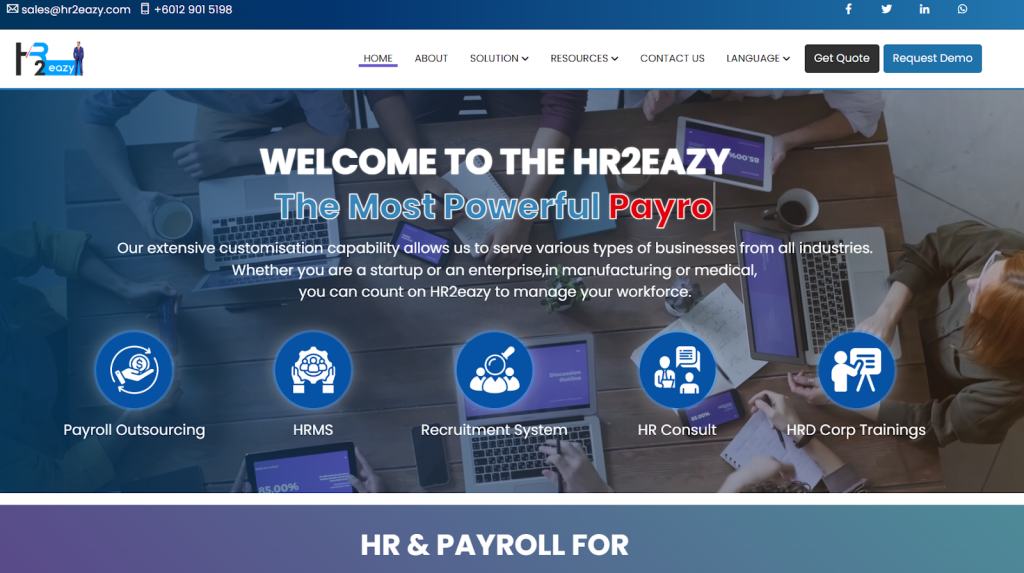
HR2eazy is a Malaysia based HRMS and payroll platform that provides end to end HR features such as payroll processing, leave management, attendance, claims, and employee database management. The system is designed with a strong focus on practical day to day usability for local organisations, especially businesses that are shifting from manual HR processes to digital workflows.
Many Malaysian companies consider HR2eazy because it places emphasis on statutory compliance, local payroll requirements, and reporting features that support audit and documentation needs. The platform also supports employee self service where staff can submit leave and claims digitally, which helps reduce manual paperwork for HR teams.
Best Suited For
SMEs and small to medium growing companies that want a Malaysia focused HRMS and payroll system with practical features for daily HR operations.
7. Orisoft
Location
Kuala Lumpur, Malaysia
Founded
1987
Website Link
https://www.orisoft.com
Orisoft is one of the more established HR and payroll solution providers in the region, with many years of experience working with medium and large organisations. The company offers HRMS solutions that include payroll, time management, workforce scheduling, and HR administration modules that cater to businesses with structured HR policies and larger employee numbers.
Malaysian organisations often consider Orisoft when they require a stable and enterprise oriented HRMS platform that can support complex HR requirements. The company has a strong presence in industries that require accurate workforce tracking and detailed reporting, especially organisations with multiple departments and branches.
Best Suited For
Medium sized companies and enterprises that need a structured and scalable HRMS solution to support complex HR processes and larger workforce operations.
8. Ramco
Location
Kuala Lumpur, Malaysia
Founded
1997
Website Link
https://www.ramco.com
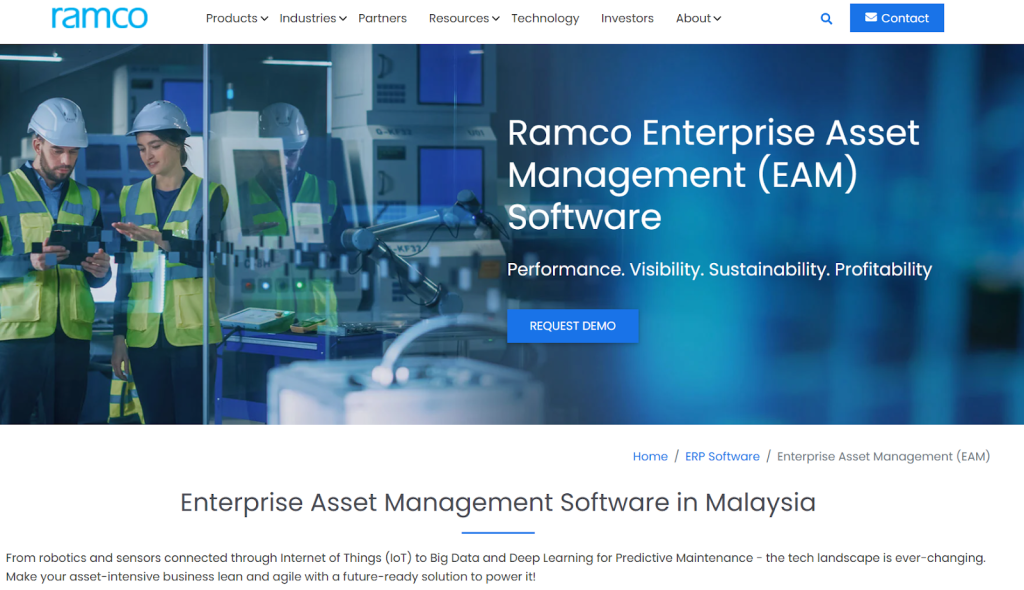
Ramco is a regional enterprise software provider that offers cloud based HR and payroll solutions used by organisations across Asia, including Malaysia. The Ramco HRMS platform is designed for organisations that require centralised HR operations, multi country payroll capability, and standardised workforce management across different locations.
Businesses in Malaysia usually consider Ramco when they are expanding regionally or when they need an HRMS system that can support both local and international operations. The platform is also commonly evaluated by companies in sectors such as manufacturing, aviation, logistics, and other industries with large employee structures.
Best Suited For
Enterprises and regional organisations that need a cloud based HRMS system with multi location capability and standardised HR and payroll operations across countries.
HRMS System Company Comparison Table
| Company Name | Location | Main Focus | Best For |
| Swingvy | Kuala Lumpur | Cloud HR and payroll platform | SMEs and growing companies |
| Kakitangan | Petaling Jaya | Local HR and payroll digitalisation | Malaysian SMEs and small businesses |
| HReasily | Kuala Lumpur | Regional cloud HRMS solution | Cross border and multi branch companies |
| Info Tech | Kuala Lumpur | Workforce and HR management system | Medium and larger organisations |
| JustLogin | Kuala Lumpur | Cloud HRMS with employee self service | SMEs and service based companies |
| HR2eazy | Petaling Jaya | Malaysia focused HR and payroll platform | SMEs and growing businesses |
| Orisoft | Kuala Lumpur | Enterprise HR and workforce management | Medium and enterprise organisations |
| Ramco | Kuala Lumpur | Regional cloud HR and payroll system | Large and regional companies |
What is an HRMS System in Simple Terms
An HRMS system is a digital platform that helps a company manage its employees and HR processes in one place. Instead of using paper files or many different spreadsheets, an HRMS system keeps everything organised inside a single system. This usually includes employee records, attendance, leave applications, payroll information, claims, and basic HR documents.
In simple terms, an HRMS system works like a central hub for people management. HR staff can update information easily, managers can review requests faster, and employees can access their own details through self service features. This reduces the amount of manual work and helps avoid confusion or misplaced records.
For Malaysian businesses, an HRMS system is especially useful when the company grows and HR tasks become more complex. It helps improve accuracy, makes HR workflows smoother, and supports better communication between HR teams and employees. Many SMEs in Malaysia also choose HRMS systems because they help standardise HR processes and reduce dependency on manual paperwork.
How HRMS Systems Support Malaysian Businesses
HRMS systems support Malaysian businesses by making HR operations more organised, structured, and efficient. When HR tasks are handled manually, there is a higher chance of errors, missing records, or delayed approvals. An HRMS system reduces these problems by putting everything into one connected platform.
One key benefit is improved accuracy in payroll and attendance records. With digital tracking, HR teams do not need to calculate or cross check information repeatedly. This also helps companies maintain better compliance with local requirements because records are clear and easy to trace.
Another important benefit is time saving for both HR staff and employees. Employees can submit leave, claims, and updates through self service features instead of constantly contacting HR officers. Managers can approve requests faster, which improves workflow efficiency across departments.
For companies with multiple branches or remote teams, HRMS systems provide better visibility and control. Business owners and management teams can view workforce data in a clearer and more structured way, which supports better decision making and long term planning.
When a Business Should Consider an HRMS System
A business should start considering an HRMS system when manual HR processes begin to slow down daily operations or create confusion in record keeping. This usually happens when the number of employees increases or when HR tasks grow more complex.
Some common situations where an HRMS system becomes helpful include
- HR teams spend a lot of time handling leave and attendance manually
- Payroll processing becomes complicated and time consuming
- Employee records are stored in many different files or folders
- Mistakes happen frequently due to manual data entry
- The company is expanding or opening new branches
When these challenges appear, an HRMS system can help the organisation move from manual handling to a more systematic and organised HR structure.
Businesses should also consider an HRMS system when they want better transparency and accountability in HR processes. With clear digital records, it becomes easier to track approvals, verify information, and manage internal audits.
Steps to Choose the Right HRMS System Company
Choosing the right HRMS system is an important decision for any business. The goal is not only to find a system with many features, but to choose one that fits the company’s current needs and future plans. The steps below provide a clearer and more structured way to evaluate HRMS providers.
Step 1
Identify your HR challenges
Make a simple list of the main problems your HR team is facing, such as attendance tracking, claims processing, payroll workload, or record management.
Step 2
Understand which HR functions need automation
Decide whether you need only payroll and leave management or a more complete system that includes performance, onboarding, or claims.
Step 3
Check whether the system supports Malaysian regulations
This includes statutory contributions, payroll formats, and calculation structures commonly used in Malaysia.
Step 4
Evaluate how easy the system is to use
A system that looks impressive but is difficult to operate may slow down adoption among employees and HR staff.
Step 5
Ask about scalability and future expansion
Make sure the system can support more employees, more branches, or more modules when the business grows.
Step 6
Request a demonstration and test workflow alignment
During the demo, check whether the approval flows and daily processes match how your company operates in real situations.
Following these steps helps businesses make a more informed and practical decision instead of choosing a system purely based on price or features alone.
Common Mistakes Businesses Should Avoid
When selecting an HRMS system, some businesses make decisions too quickly without proper evaluation. This can lead to implementation issues or poor system adoption later. The mistakes below are commonly observed and should be avoided.
One common mistake is choosing a system only because it is cheap or highly promoted, without checking whether it actually fits the company workflow. Another mistake is not involving HR staff and end users in the decision process, which may cause resistance when the system is implemented.
Conclusion
HRMS systems play an important role in helping Malaysian businesses streamline HR operations, improve efficiency, and reduce manual work. For SMEs and growing companies, adopting a suitable HRMS system can make HR processes more organised and sustainable as the organisation expands.
The companies listed in this guide are meant to serve as a starting reference for businesses that are exploring HRMS options in Malaysia. Since every organisation has different requirements, it is important to contact the providers directly and discuss your business needs, team size, and operational structure.
With proper evaluation and planning, the right HRMS system can support better HR management and a more efficient working environment for both employers and employees.
Some companies also select too many modules that they do not really need, which increases cost and complexity. Others focus only on payroll features and overlook important aspects such as user friendliness, reporting capability, or integration needs.
Another frequent issue is not planning for training and onboarding. Even a good system may fail if employees do not understand how to use it properly.
By avoiding these mistakes, businesses can increase the chances of successful implementation and ensure that the HRMS system truly supports daily operations and long term growth.