

Introduction
Malaysia is one of the world’s largest manufacturers of solar photovoltaic (PV) technology, frequently ranking as the third largest globally after China and Vietnam. For decades, the country has served as a major export hub for solar panels, even though domestic solar adoption has historically lagged behind its manufacturing strength, with renewable energy accounting for just 2% of Malaysia’s total electricity generation capacity.
To better understand Malaysia’s solar landscape, it is important to distinguish between manufacturing and supplying. Manufacturing focuses on producing solar panels and PV components, while suppliers handle distribution, system integration, and delivery to end users. Recognising this difference helps readers better evaluate how various companies contribute to the growth of solar energy in Malaysia. As such, this article will explore both home-grown companies that manufacture solar equipment and international brands that operate production facilities in Malaysia, and upcoming trends in Solar energy in Malaysia.
Disclaimer: The companies listed in this article are included for general informational purposes only. This guide aims to provide helpful insights for Malaysian readers regarding solar manufacturing. The rankings do not indicate preference or endorsement, and readers are encouraged to visit each company’s official website to confirm details before making any decisions.
| Table of Contents |
| Introduction |
| Listing of Solar Manufacturers |
| ITRAMAS Corporation |
| Sunmax Energy |
| Mirai Energy |
| Xinyi Solar Malaysia |
| LONGi Malaysia |
| First Solar Malaysia |
| Hanwha Q Cells Malaysia |
| Trina Solar Malaysia |
| Kibing Group Malaysia |
| Upcoming Trends in Malaysian Solar Energy |
| Conclusion |
List of Solar Manufacturers in Malaysia
1. ITRAMAS Corporation

Location: Shah Alam
Founded: 2000
Website Link: https://itramas.com/
ITRAMAS Corporation provides complete solutions for large-scale solar projects, corporate renewable energy programs, and power purchase agreements. They handle everything from project planning and land acquisition to construction, installation, and long-term maintenance of solar power plants.
The company runs a 3-acre facility in Shah Alam that manufactures solar panels, Solar Combiner Boxes, and other key components. Recently, ITRAMAS partnered with China’s Wuxi Longmax to set up a dedicated production line for Solar Combiner Boxes, supplying both local projects and international exports.
Best Suited For: Projects and businesses looking for end-to-end solar solutions, as well as high-quality PV components manufactured locally
2. Sunmax Energy

Location: Penang
Founded: 2019
Website Link: https://www.sunmax-energy.com/
Sunmax Energy is a niche solar manufacturer that focuses on small-scale and portable solar technology rather than larger panels. The company specializes in encapsulation techniques for crystal silicon types, producing panels ranging from 0.5W up to 200W.
Sunmax Energy uses advanced materials beyond traditional glass, including flexible ETFE/PET panels and durable tempered glass for industrial applications. Its key products include custom industrial panels for remote video surveillance, GPS trackers, IoT devices, outdoor lighting, and RV electronics. The company primarily operates as an OEM/ODM partner, supplying specialized solar components to global technology brands.
Best Suited For: Projects and businesses needing small, portable, or specialized solar panels.
3. Mirai Energy

Location: Subang Jaya
Founded: 2015
Website Link: https://www.miraienergy.com.my/
Mirai Energy provides solar solutions for residential, commercial, and corporate clients in Malaysia. The company focuses on developing energy-saving products with improved functionality. While they specialize in manufacturing solar water heating systems, they also offer solar photovoltaic (PV) panels and portable battery storage systems as part of integrated energy solutions.
Best Suited For: Homes and businesses seeking practical, energy-efficient solar solutions, including solar water heating, PV systems, and battery storage.
4. Xinyi Solar Malaysia
Location: Melaka
Founded: 2014
Website Link: https://www.xinyisolar.com/en/index.aspx
Xinyi Solar is a world-leading company that makes the special glass used in solar panels, rather than the panels themselves. Their products include ultra-clear glass, anti-reflective glass, and back glass that help panels work efficiently.
Xinyi set up its first overseas base in Melaka to produce high-quality glass for solar panels. The company also makes laminated glass for windshields. With an investment of about RM2.1 billion, Xinyi Solar Malaysia has created more than 1,900 jobs and made Melaka one of its six key production centers worldwide.
Best Suited For: Solar panel manufacturers and developers who need high-quality PV glass components for panel production.
5. LONGi Malaysia

Location: Sarawak
Founded: 2016
Website Link: https://www.longi.com/en/
LONGi is a leading Chinese solar technology company headquartered in China, with a strong manufacturing presence in Malaysia. The company operates across a vertically integrated solar photovoltaic (PV) value chain, covering silicon wafers, cells, bifacial PV modules, and end-to-end PV solutions, including consultation, design, installation, procurement, commissioning, and operation and maintenance services.
LONGi has dedicated itself to continuous technology innovation and has established five core business sectors, spanning monocrystalline silicon wafers, cells and modules, commercial and industrial distributed solar solutions, green energy solutions, and hydrogen equipment. Its first international manufacturing base in Kuching is also the world’s premier vertically integrated monocrystalline silicon solar manufacturing facility. In Malaysia, LONGi has invested approximately RM5.4 billion and operates a 140-acre module manufacturing plant, generating an estimated 900 to 2000 local employment opportunities.
Best Suited For: Large-scale solar projects requiring high-efficiency monocrystalline modules and strong manufacturing reliability.
6. First Solar Malaysia

Location: Kedah
Founded: 2007
Website Link: https://www.firstsolar.com/
First Solar Malaysia is a major subsidiary of the U.S.-based solar manufacturer First Solar, operating the company’s largest high-technology manufacturing site for advanced thin-film PV modules. Located on a 160-acre site in Kulim, Kedah, the facility employs over 4,000 local associates and plays a key role in First Solar’s global production network.
Beyond manufacturing, First Solar Malaysia is known for its strong focus on sustainability and community engagement. The site hosts one of Malaysia’s largest grid-connected carpark solar PV installations and operates a full recycling facility capable of recovering up to 90% of glass and semiconductor materials for reuse in new modules and other products. The company also takes part in Corporate Social Responsibility efforts, including interactive exhibitions to promote scientific literacy, volunteer programmes, and solar panel donations through joint initiatives with the Kedah state government.
Best Suited For: Utility-scale and large commercial solar projects seeking thin-film PV technology with strong sustainability and recycling credentials.
7. Hanwha Q Cells Malaysia

Location: Cyberjaya
Founded: 2008
Website Link: https://www.hanwha.com/
Hanwha Q Cells is one of the world’s leading clean energy companies, known for its high-performance solar cells and modules, intelligent energy storage systems, and a growing portfolio of large-scale renewable energy projects. The company’s global executive headquarters is in Seoul, South Korea, with its Technology & Innovation HQ in Thalheim, Germany.
In Malaysia, Hanwha Q Cells operates a large-scale module factory in Cyberjaya, equipped with four production lines and automated machinery capable of producing 800 MW of high-performing solar modules. The facility combines the company’s international R&D expertise with mass production capabilities, supplying solar solutions to utility, commercial, governmental, and residential markets.
Best Suited For: Commercial, utility-scale, and residential projects seeking high-efficiency solar modules backed by international R&D and automated production.
8. Trina Solar Malaysia

Location: Petaling Jaya
Founded: 2012
Website Link: https://www.trinasolar.com/en-apac/
Instead of running a huge factory of its own, Trina Solar works with local partners (known as OEMs, or Original Equipment Manufacturers) to assemble its solar modules. Trina Solar provides the technology and quality standards, while the Malaysian partners handle the factory and workforce. This setup produces around 500 MW to 1 GW of solar modules for international markets each year.
Most of Trina Solar’s Malaysian production happens in Penang, taking advantage of the area’s strong electronics and solar supply network. In recent years, Trina Solar has focused more on supplying solar modules to local projects rather than expanding factories.
Best Suited For: Commercial and utility-scale solar projects that want reliable supply partnerships without needing a local factory.
9. Kibing Group Malaysia
Location: Negeri Sembilan
Founded: 2014
Website Link: https://www.kibing-glass.com/en/index.aspx
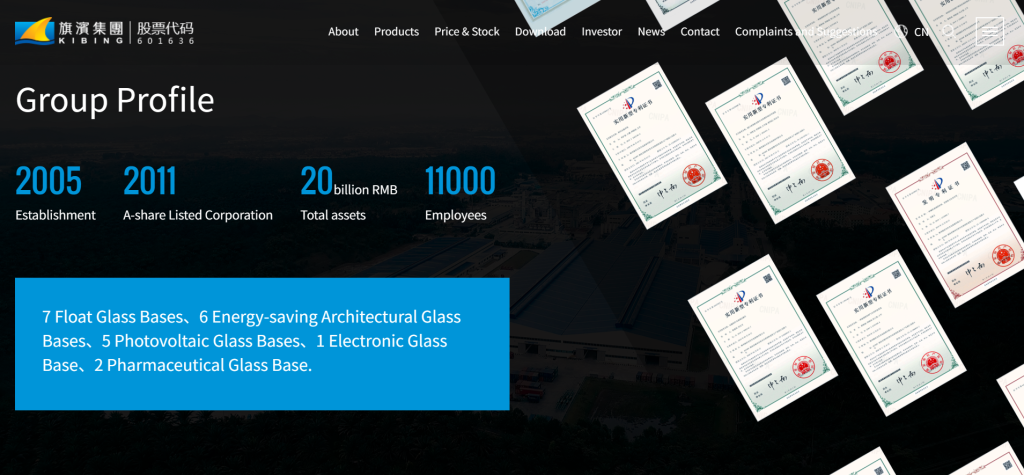
SBH Kibing Group does not produce complete solar panels. Instead, the company specializes in ultra-clear PV glass, which is the protective glass layer used on solar panels. The company also owns a silica sand processing plant in Kudat, Sabah, which supplies raw materials directly to its glass factories and helps reduce reliance on global supply chains.
SBH Kibing Group operates several large-scale facilities across the country. Its first major solar glass plant at Kota Kinabalu Industrial Park is fully operational and exports containers of solar glass each month to international markets. In Kimanis, Sabah, the company is developing a new RM7.2 billion plant, which is expected to become one of the region’s largest solar glass facilities. Kibing also maintains a manufacturing site in Seremban, Negeri Sembilan, producing float glass and other specialised glass products.
Best Suited For: Solar panel manufacturers that require high-volume, locally produced PV glass.
Upcoming Trends in Malaysian Solar Energy
Since Malaysia’s implementation of the Solar Accelerated Transition Action Programme (Solar ATAP), a potential new phase of solar energy growth in Peninsular Malaysia will take place. Here are some of the upcoming trends that may take place in the Malaysian solar landscape:
- Floating Solar and Hydro-Solar Hybrids: With land becoming more expensive, Malaysia is tapping its reservoirs for solar energy. These hybrid systems benefit from water cooling, which improves panel efficiency while also reducing water evaporation.
- Carbon Tax and Export Competitiveness: Starting in 2026, Malaysia’s carbon tax implementation will have an effect on local manufacturers exporting out of the country. Hence, solar energy is no longer just about cutting electricity bills, it will help companies reduce their carbon footprints and avoid extra taxes.
- Battery Storage (BESS) is Now Mandatory: Starting in 2026, many solar programs, including SELCO guidelines for systems over 1 MW, require battery integration. Batteries allow users to store excess energy during the day and use it during peak evening hours, helping to reduce strain on the national grid.
- Rooftop Solar Rebirth: Solar ATAP allows residential, commercial, and industrial users to generate and export rooftop solar energy, replacing NEM 3.0. With a national ceiling of 500 MW, the programme revitalizes Malaysia’s rooftop solar market and encourages more businesses and homeowners to invest in distributed solar generation.
Conclusion
Solar energy is right at our doorstep, so why aren’t we using it more? The answer is simple. Getting started can feel overwhelming. While going solar is a smart and worthwhile investment, the upfront costs and lack of practical resources can make that first step challenging.
If we can make solar energy more accessible for everyday Malaysians, our strong solar manufacturing industry will not only serve global markets but can also power homes, businesses, and communities right here at home. With the right support, tapping into solar energy becomes simpler, helping Malaysia save on energy and embrace a brighter, more sustainable future.


