


Introduction
Cyber attacks in Malaysia are no longer only targeting large enterprises. Small and medium businesses are increasingly affected through phishing emails, fake payment requests, and social engineering scams that exploit human mistakes rather than technical weaknesses. This is why security awareness training has become just as important as firewalls and antivirus software.
This article shares our perspective on the Top 10 Security Awareness Training Companies in Malaysia. It highlights organisations that help businesses train employees to recognise threats, protect sensitive data, and respond correctly when something feels wrong. You will also find practical context on who each provider is best suited for, so you can make a clearer decision.
Disclaimer: The ranking of companies in this article does not reflect performance order and is based on our editorial perspective only. We strongly recommend contacting each company directly to confirm that their services align with your business needs. All information is accurate at the time of writing. If you notice any inaccuracies, please reach out to us so we can update the content accordingly.
| Table of Contents |
| Introduction |
| Top 10 Security Awareness Training Companies in Malaysia |
| 1. CyberSecurity Malaysia |
| 2. LGMS Berhad |
| 3. Condition Zebra (M) Sdn Bhd |
| 4. BlackBerry Cybersecurity Center of Excellence (CCoE) Sdn Bhd |
| 5. Securelytics Sdn Bhd |
| 6. InternetNow Teknologi Sdn Bhd (Security AwarenessNow) |
| 7. Cyber Intelligence Sdn. Bhd. |
| 8. Security Quotient Sdn. Bhd. |
| 9. Yokogawa Kontrol (Malaysia) Sdn. Bhd. |
| 10. RSM Malaysia PLT |
| Why Your Employees are Your Best Defense |
| 3 Best Ways to Train Your Staff |
| How to Choose a Training Partner in Malaysia |
| Conclusion |
Top 10 Security Awareness Training Companies in Malaysia
1. CyberSecurity Malaysia

Location: Cyberjaya, Selangor
Founded: 1997
Website Link: https://www.cybersecurity.my
CyberSecurity Malaysia is the national cybersecurity agency under the Ministry of Digital and is widely recognised as the authority for cybersecurity awareness and certification in the country. Its training programs are designed to support national cyber resilience and are often aligned with public sector requirements and national frameworks. Many organisations choose CyberSecurity Malaysia for its credibility, structured curriculum, and government-backed expertise.
The organisation offers formal security awareness programs, competency certifications, and public awareness initiatives for employees and professionals. These programs are commonly used by government bodies, regulated industries, and organisations that require official recognition or structured learning paths. Their training is well suited for organisations that value standardisation, governance, and national alignment.
Best Suited For: Government agencies, regulated organisations, and companies that require nationally recognised cybersecurity training and certifications.
2. LGMS Berhad

Location: Subang Jaya, Selangor
Founded: 2005
Website Link: https://lgms.global
LGMS Berhad is often regarded as a technical benchmark in Malaysia’s cybersecurity industry, with a strong focus on deep security expertise rather than bundled IT services. While widely known for penetration testing, LGMS also delivers structured security awareness and executive-level training for organisations that take cyber risk seriously. Their programs are designed to help employees and board members understand threats from both a technical and business impact perspective.
LGMS places strong emphasis on real-world attack scenarios, risk ownership, and accountability across different organisational levels. Their training approach is often selected by companies operating under strict regulatory frameworks such as PDPA, ISO 27001, and financial sector guidelines. This makes LGMS a trusted option when security awareness must stand up to audits and board-level scrutiny.
Best Suited For: Enterprises, financial institutions, and regulated organisations that need high-assurance security awareness and executive-level cyber risk training.
3. Condition Zebra (M) Sdn Bhd

Location: Petaling Jaya, Selangor
Founded: 2007
Website Link: https://condition-zebra.com
Condition Zebra is known for delivering engaging and interactive security awareness training that moves away from traditional slide-based lectures. The company focuses on human behaviour, helping employees understand how attackers manipulate emotions such as urgency, fear, and authority. Their sessions are often delivered as live talks, workshops, and simulations that encourage active participation.
What makes Condition Zebra stand out is its emphasis on realism and storytelling. Employees are guided through real-life attack scenarios and asked to think through their reactions in a safe environment. This approach helps organisations uncover weak points in staff awareness while creating memorable learning experiences that stick beyond the training room.
Best Suited For: Organisations that want engaging, human-focused training to improve employee awareness and reduce risky behaviour.
4. BlackBerry Cybersecurity Center of Excellence (CCoE) Sdn Bhd
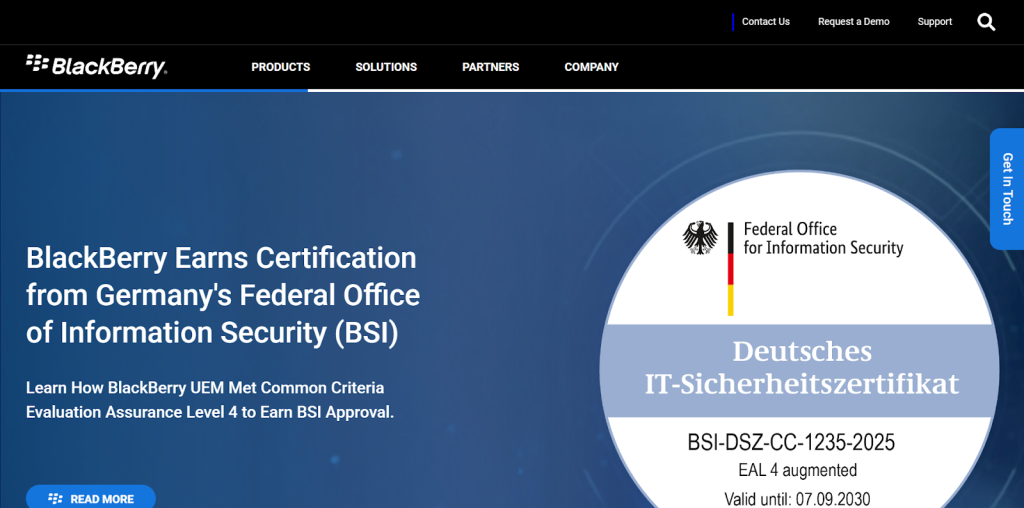
Location: Cyberjaya, Selangor
Founded: 2024
Website Link: https://www.blackberry.com/us/en/
The BlackBerry Cybersecurity Center of Excellence in Malaysia serves as a regional hub for cybersecurity education and professional development. It combines global expertise with local delivery, focusing on both technical security skills and everyday cyber hygiene. The centre supports training for professionals, students, and corporate teams.
Its programs cover awareness training, best practices for secure behaviour, and exposure to modern cyber threats affecting businesses today. Being part of a global cybersecurity brand gives participants access to internationally recognised knowledge and methodologies. This makes it a strong option for organisations that want globally aligned training delivered locally.
Best Suited For: Companies seeking internationally influenced security awareness programs and professional cybersecurity skill development.
5. Securelytics Sdn Bhd

Location: Petaling Jaya, Selangor
Founded: 2014
Website Link: https://www.securelytics.my
Securelytics offers practical and measurable security awareness training designed to improve employee behaviour over time. The company partners with established global platforms to deliver structured learning modules combined with progress tracking and reporting. This allows organisations to monitor engagement and improvement across teams.
Their approach focuses on consistency rather than one-off sessions. Employees receive ongoing training content that evolves with emerging threats such as phishing, credential theft, and data leakage. Securelytics is often chosen by organisations that want visibility into training effectiveness and long-term behavioural change.
Best Suited For: Businesses that want measurable, ongoing security awareness training with clear reporting and progress tracking.
6. InternetNow Teknologi Sdn Bhd (Security AwarenessNow)

Location: Puchong, Selangor
Founded: 1999
Website Link: https://securityawareness.com.my
InternetNow operates Security AwarenessNow, a fully managed security awareness service that combines training with regular phishing simulations. The company focuses on automating awareness programs so employees receive continuous exposure to realistic but safe attack scenarios. This helps organisations identify risky behaviour early.
Their service includes simulated phishing emails, awareness content, and reporting dashboards for management. By turning mistakes into learning moments, InternetNow helps organisations reduce repeat incidents caused by human error. The managed nature of the service also reduces internal workload for IT and HR teams.
Best Suited For: Organisations that want a hands-off, managed security awareness program with regular phishing simulations.
7. Cyber Intelligence Sdn. Bhd.

Location: Cyberjaya, Selangor
Founded: 2007
Website Link: https://cyberintelligence.my
Cyber Intelligence specialises in phishing simulations and security awareness programs that reflect real-world attack techniques. The company is known for designing realistic email attacks that test how employees respond under normal working conditions. These exercises help organisations understand their true level of exposure.
Beyond simulations, Cyber Intelligence also provides follow-up training to explain why employees fell for certain attacks and how to avoid similar mistakes in the future. This combination of testing and education supports continuous improvement rather than blame. Their services are often used by organisations that want clear insights into staff behaviour.
Best Suited For: Companies that want realistic phishing simulations to identify risks and reinforce learning through targeted follow-up training.
8. Security Quotient Sdn. Bhd.

Location: Kuala Lumpur, Federal Territory
Founded: 2023
Website Link: https://securityquotient.io/my
Security Quotient focuses on building a security-first mindset rather than simply delivering technical instructions. Their awareness programs emphasise data protection, risk awareness, and everyday decision-making that affects security. Training content is designed to be simple, relatable, and relevant to daily work routines.
The company also offers specialised courses covering governance, risk, and compliance topics. This makes their programs useful for both general employees and those with compliance responsibilities. Security Quotient is often selected by organisations that want to strengthen culture alongside compliance readiness.
Best Suited For: Organisations aiming to build long-term security culture and improve awareness around data protection and risk management.
9. Yokogawa Kontrol (Malaysia) Sdn. Bhd.

Location: Puchong, Selangor
Founded: 1989
Website Link: https://www.yokogawa.com/my
Yokogawa Malaysia brings a specialised focus on cybersecurity awareness for industrial environments such as factories, plants, and critical infrastructure. Unlike office-based training, their programs address operational technology risks that can impact safety, production, and physical assets. This includes threats targeting industrial control systems.
Their training is designed for engineers, operators, and plant management who need to understand how cyber incidents can affect physical operations. By linking cybersecurity to safety and reliability, Yokogawa helps industrial organisations take a more holistic approach to risk.
Best Suited For: Manufacturing plants, utilities, and industrial organisations that require security awareness tailored to operational technology environments.
10. RSM Malaysia PLT

Location: Kuala Lumpur, Federal Territory
Founded: 1978
Website Link: https://www.rsm.global/malaysia
RSM Malaysia integrates security awareness training with legal, risk, and compliance advisory services. This allows organisations to understand not only how to avoid cyber incidents but also the regulatory and legal consequences when breaches occur. Their approach connects people’s behaviour with governance responsibilities.
Training programs often align with PDPA requirements and broader risk management frameworks. RSM’s multidisciplinary background makes it suitable for organisations that want cybersecurity awareness to support compliance, audit readiness, and board-level accountability.
Best Suited For: Organisations that want security awareness training aligned with legal compliance, data protection, and enterprise risk management.
Why Your Employees are Your Best Defense
Technology can block many threats, but attackers often target people because humans are easier to trick than systems. Employees are the first line of defense when it comes to spotting suspicious emails, fake requests, and unusual behaviour. When staff are trained properly, they can stop an attack before it turns into a costly incident.
Security awareness training helps employees feel confident rather than fearful. Instead of blaming mistakes, good training focuses on recognition, reporting, and improvement. This creates a workplace where staff actively protect company data and systems as part of their daily routine.
1. Identifying Phishing Scams and Fake Emails
Phishing emails often look convincing because they copy real brands, writing styles, and business processes. Employees are trained to spot warning signs such as urgent payment requests, unexpected attachments, and links that do not match official websites. Understanding these red flags helps staff slow down before taking action.
Training also teaches employees to verify requests through secondary channels like phone calls or internal systems. This simple habit can stop many common scams targeting Malaysian businesses. Over time, employees become more cautious and less reactive to pressure-based messages.
2. Preventing Social Engineering and Manipulation
Social engineering attacks rely on human emotions rather than technical flaws. Attackers may pretend to be senior management, vendors, or even government agencies to gain trust. Employees learn how authority exploitation and fear-based messaging are commonly used tactics.
Security awareness training encourages staff to question unusual requests, even if they appear to come from someone important. By understanding manipulation techniques, employees feel empowered to pause and confirm instead of blindly complying. This reduces the risk of financial fraud and data leaks.
3. Protecting Sensitive Data and Company Passwords
Poor password habits remain a major cause of security breaches. Training teaches employees how to create strong passwords and why reusing passwords across systems is dangerous. Staff also learn the importance of multi-factor authentication for protecting accounts.
Beyond passwords, employees are trained to handle sensitive data responsibly. This includes understanding what information should not be shared through email or messaging apps. These small daily habits greatly reduce the chance of accidental data exposure.
4. Responding Fast to Potential Security Breaches
Many incidents become serious because employees are unsure what to do after making a mistake. Security awareness training clearly explains reporting procedures and contact points. Employees learn that fast reporting helps limit damage and is always encouraged.
By removing fear and blame, organisations improve response time. Employees feel safer admitting mistakes early rather than hiding them. This transparency allows security teams to act quickly and prevent further harm.
3 Best Ways to Train Your Staff
Traditional lectures alone are no longer effective for cybersecurity awareness. Modern training focuses on interaction, realism, and repetition to help lessons stick. This section explains the most effective methods used by leading Malaysian training providers.
1. Testing Staff with Real-Life Phishing Simulations
Phishing simulations allow employees to experience realistic attack scenarios in a safe environment. These simulated emails look like real threats but cause no harm. When someone clicks, it becomes a learning opportunity rather than a punishment.
Over time, organisations can track improvement in employee behaviour. Repeated exposure helps staff recognise patterns and avoid similar attacks in real life. This method turns theory into practical experience.
2. Moving from Boring Lectures to Hands-on Training
Employees often forget information delivered through long presentations. Hands-on training uses workshops, discussions, and interactive exercises to keep attention high. This approach improves understanding and retention.
The SACT framework, which includes Strategy, Advisory, Consulting, and Training, helps organisations connect awareness with real business risks. Employees understand not just what to do, but why it matters. This creates more meaningful engagement with security topics.
3. Specialized Training for Industrial and Plant Safety
Factories and plants face different cyber risks compared to office environments. Industrial systems can affect physical safety, production uptime, and equipment integrity. Training for these environments must address operational technology threats.
Specialised programs focus on real plant scenarios and roles such as engineers and operators. Employees learn how cyber incidents can impact both safety and business continuity. This targeted approach is essential for industrial organisations in Malaysia.
How to Choose a Training Partner in Malaysia
Not all security awareness programs are suitable for every organisation. Choosing the right partner requires understanding your business needs, workforce, and compliance obligations. This section offers practical guidance for Malaysian businesses.
1. Matching Training to Your Specific Industry Needs
Different industries face different cyber risks. A professional services firm may need strong phishing awareness, while a manufacturing company may need plant security training. Choosing a provider with relevant industry experience improves training effectiveness.
Organisations should assess whether they need basic awareness, advanced simulations, or executive-level training. A good training partner will help customise content rather than offering a one-size-fits-all solution.
2. Looking for HRD Corp Claimable Programs
Many Malaysian companies can use HRD Corp levy funds to cover cybersecurity training costs. Choosing HRD Corp claimable programs reduces financial burden while improving security posture. This makes training more accessible and sustainable.
Businesses should confirm eligibility directly with the training provider. Proper documentation and compliance ensure smooth claims and maximum benefit from available funding.
3. Measuring Success Through Improved Security Habits
Certificates alone do not guarantee better security. Organisations should look for measurable behaviour change such as reduced phishing clicks and faster incident reporting. These indicators show real improvement.
Long-term success comes from continuous training rather than one-off sessions. Choosing a partner that offers ongoing assessment and reinforcement helps maintain strong security habits across the organisation.
Conclusion
Security awareness training is no longer optional for Malaysian businesses facing increasingly sophisticated cyber threats. By focusing on people, organisations can reduce risk, prevent costly incidents, and build a culture of shared responsibility. The companies listed in this article offer a range of approaches, from national certifications to interactive simulations and industry-specific training.


