Introduction
Artificial Intelligence (AI) is rapidly moving beyond our screens and into the physical world, creating a new and powerful field known as Physical AI. This innovation represents a leap from mere digital processing to systems that can sense, reason, and act in real-time physical environments. For Malaysia, which is focused on digital transformation and high-tech manufacturing, Physical AI offers enormous potential to automate complex industrial tasks, enhance robotics, and drive efficiency across various sectors. The country’s strategic direction, championed by bodies like the National AI Office (NAIO), prioritizes the ethical and effective deployment of these advanced technologies. This article will break down exactly what Physical AI is, how it functions, how it differs from traditional software AI, and showcase its tangible benefits and real-world applications in the modern world.
What Exactly Is Physical AI
Physical AI refers to intelligent systems that can perceive, understand, and interact with the real world through physical actions. Unlike conventional AI which operates only within the digital domain such as classifying data or recommending content, Physical AI is embodied. It must navigate the unpredictable laws of physics and the complexities of three-dimensional space.
The core distinction is simple:
- Software AI (e.g., a data analytics program) deals with bits and bytes.
- Physical AI (e.g., a smart factory robot or an autonomous delivery vehicle) deals with matter and motion.
Physical AI allows machines to handle tasks that require dexterity, spatial reasoning, and continuous adaptation to changing circumstances, making them truly autonomous and capable of operating in unstructured environments.
How Physical AI Works
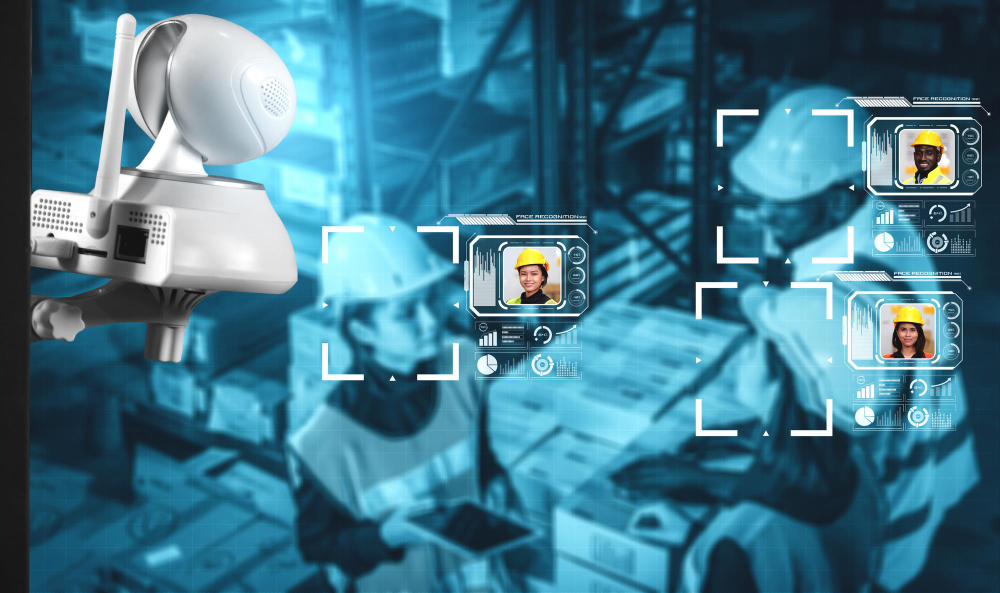
Physical AI systems rely on a continuous, closed-loop process to interact with their environment. This process can be broken down into three crucial stages: Sensing, Reasoning, and Action.
1. Sensing
The machine gathers real-world data using various IoT (Internet of Things) components and sensors.
- Sensors: Cameras, LiDAR, radar, pressure sensors, and haptic sensors collect rich, continuous data about the physical environment, including the location, shape, and state of objects.
- Data Conversion: This raw analog data is then converted into a digital format that the AI can process.
2. Reasoning
This is the “brain” of the system, where sophisticated models process the sensory input to make decisions.
- Perception: The AI uses computer vision and machine learning models to identify and categorize objects, calculate distances, and predict future movements.
- Planning and Prediction: Based on the current goal, the AI runs algorithms to determine the optimal next action. This often involves Generative Physical AI, where the system models potential physical outcomes before acting, such as how to grasp a complex object or navigate around an unexpected obstacle.
3. Action
The machine translates the digital decision back into a physical movement.
- Actuators: Motors, hydraulic systems, and robotic appendages execute the planned movement.
- Control Loop: The action affects the environment, which is immediately picked up by the sensors, restarting the loop. This feedback mechanism allows for continuous adjustment, making the action precise and safe.
Physical AI Vs. Traditional AI
Understanding the distinction between Physical AI and the traditional software AI we use daily is key to grasping the full scope of this new technology.
| Feature | Physical AI | Traditional Software AI (Narrow AI) |
| Primary Domain | The Real World (3D space, physics, environment) | The Digital World (data, code, text, images) |
| Input | Sensory data (Video, LiDAR, touch, sound, temperature) | Structured or Unstructured Data (Text, databases, clicks, records) |
| Output | Physical Action (Movement, grasping, welding, driving) | Digital Output (Prediction, classification, recommendation, generation) |
| Goal | Achieve a physical objective safely and efficiently | Process data, automate cognitive tasks |
| Example | An Automated Guided Vehicle (AGV) transporting goods | An algorithm predicting stock price movements |
Key Benefits of Physical AI for Businesses and Malaysia
The adoption of Physical AI is not just about automation, it is about enabling new levels of productivity, safety, and operational excellence, which are crucial for Malaysia’s push toward a high-income, digitally-led economy under the Industry4WRD national policy.
1. Enhanced Productivity and Efficiency
Physical AI systems operate tirelessly and with superhuman precision, significantly speeding up production cycles. This helps local Malaysian manufacturers increase their global competitiveness by achieving faster cycle times and better quality consistency.
2. Increased Safety in Dangerous Environments
By deploying autonomous robots in hazardous areas such as high-heat production lines or in the inspection of complex infrastructure, businesses can minimize human exposure to risk.
3. Flexibility and Customisation
Physical AI can adapt to different tasks and products without extensive reprogramming. This adaptability supports smaller batch sizes and greater product customization which is a major advantage for diverse manufacturing and logistics needs.
4. Mini Case Study Automation in Malaysian Manufacturing
- Case Example: MIMOS Berhad, Malaysia’s National Applied R&D Centre, developed the Mi-Vision AOI (Automated Optical Inspection) system. This is a powerful illustration of Physical AI used in the Electrical and Electronics (E&E) sector.
- The Process: This system uses high-speed cameras (Sensing) combined with Deep Learning (Reasoning) to inspect complex products like printed circuit boards (PCBs). The AI is trained to detect microscopic defects that are irregular or difficult for traditional machine vision to spot.
- The Impact (Action): By providing high-accuracy, real-time quality control, the system ensures that only products meeting stringent standards proceed down the line. This significantly improves output quality, reduces material waste, and is directly utilized by manufacturers in Malaysia’s E&E sector, which is critical to the nation’s GDP.
Real World Applications of Physical AI Examples and Case Studies
Physical AI is already transforming several key industries both globally and locally.
Key Differences of Agentic AI vs. Generative AI
The table below summarises the fundamental distinctions between the two technologies.
1. Advanced Manufacturing and Assembly
Physical AI enables highly precise control over robotic arms for tasks like microchip component placement or automated welding.
- Example: Malaysian technology solution providers like Innoveam offer smart factory solutions that utilize AI cameras and sensors to perform quality assurance and optimize production lines for local electronics and automotive suppliers, driving the transition to Industry 4.0.
2. Autonomous Systems and Logistics
Autonomous vehicles (AVs) and Automated Guided Vehicles (AGVs) are prominent applications. These systems must constantly sense their environment, reason, and act to achieve seamless movement.
- Example: Global logistics players operating in Malaysia, such as FedEx and those involved in developing Smart Logistics Complexes, deploy AI-powered sorting robots and AGVs in their APAC facilities. These robots intelligently sort and transport packages, accelerating cross-border shipping and improving inventory management accuracy by combining physical robotics with AI-driven route optimization.
3. Infrastructure Inspection and Monitoring
Physical AI deployed via inspection drones or climbing robots can assess the integrity of large-scale infrastructure.
- Example: The Malaysian Institute of Microelectronic Systems (MIMOS) has developed AI-powered vision systems for real-time monitoring, such as the SMART Lockup surveillance system. While used for security, this application demonstrates Physical AI principles: Cameras (Sensing) feed video analytics (Reasoning) to detect suspicious behaviours and trigger alerts (Action).
Overcoming the Challenges and Looking Ahead

While the promise of Physical AI is great, its widespread adoption in markets like Malaysia faces several hurdles.
1. Data Collection and Training
Training Physical AI requires massive amounts of high-quality physical interaction data. Simulating the real world is difficult, and collecting real-world data in varied Malaysian environments is costly and time-intensive.
2. Safety and Trust
Integrating autonomous systems requires guaranteed safety protocols and building public trust. The system must be rigorously tested to ensure it can make safe, ethical decisions, especially when operating near human workers.
3. The Future is Collaborative
The future of Physical AI lies in Human-Robot Collaboration (HRC). Instead of full replacement, Physical AI systems will increasingly work alongside human workers, for instance, a collaborative robot arm handing a specific tool to an assembly technician. This integration will boost human capabilities rather than eliminating them, leading to smarter, more efficient workplaces across Malaysia.
Conclusion
Physical AI marks the exciting evolution of intelligence from the virtual space into the tangible world. By successfully merging advanced sensing technology, complex machine reasoning, and precise physical action, these systems are fundamentally changing how industries operate. For Malaysia, embracing this technology, from automated quality control in E&E to smart logistics in distribution hubs, is not merely an upgrade, it is a critical step in fulfilling the Industry 4.0 vision.
Crucially, the National AI Office (NAIO) serves as the central authority, strategically guiding the ethical and widespread adoption of these technologies across all sectors. As investment and technological maturity increase, Physical AI will serve as the engine driving the nation towards greater productivity, safety, and global competitiveness, building a smarter and more efficient future for everyone.